
僵尸先生
辽宁省总工会发布23项暖“新”清单_我的网站

一 | 日前,由省总工会主办的辽宁省工会关爱凝聚新就业形态劳动者“流动暖新”主题活动暨沈阳市总工会“流动促入会”品牌工作观摩活动在沈阳举行,现场发布了针对新就业形态劳动者的23项服务清单。

二 |
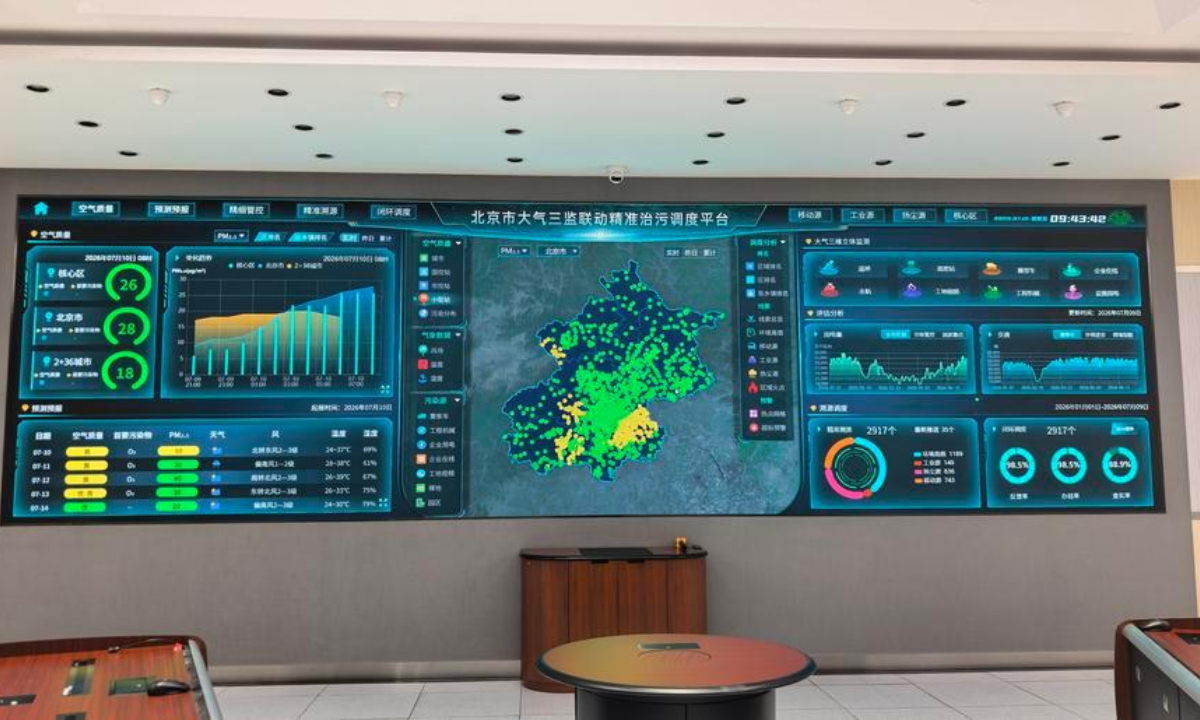
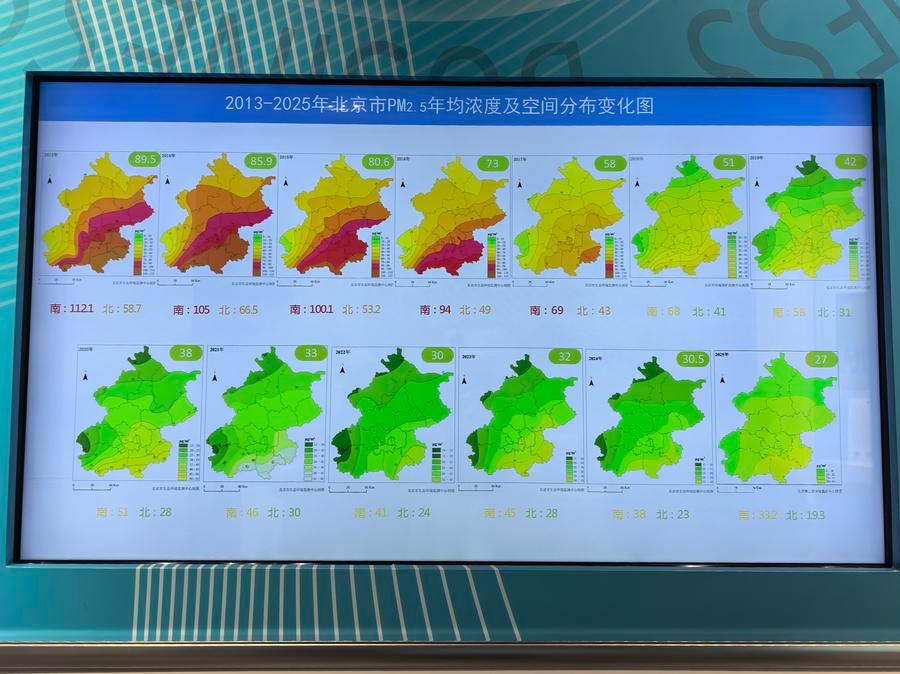
In 2025, Beijing recorded 311 days with good air quality and only one heavily polluted day, compared with 58 heavily polluted days in 2013, when the city officially began releasing PM2.5 monitoring data. The annual average PM2.5 concentration, a key indicator of air quality, fell from 89.5 micrograms per cubic meter in 2013 to 27 micrograms per cubic meter in 2025, a decline of nearly 70 percent.
The progress has drawn international attention. The United Nations Environment Programme has highlighted Beijing's experience in improving air quality as a model for other cities.
According to experts at the Beijing Municipal Ecological and Environmental Monitoring Center, the cleaner air is the result of a comprehensive system integrating environmental monitoring, scientific analysis, policymaking, regional cooperation and law enforcement -- with digital technologies now woven into every link of that chain.
MORE TARGETED APPROACH
Effective governance begins with accurate monitoring. Beijing has established a multi-level air-quality monitoring network. Figures show 35 standard monitoring stations across the city continuously measure six major pollutants, while more than 1,000 compact sensors deployed across communities and townships provide more detailed information on local air-quality variations.
The monitoring system was gradually built by the Beijing Municipal Ecological and Environmental Monitoring Center, one of China's earliest ecological and environmental monitoring institutions, responsible for monitoring Beijing's air, water, noise, soil environments and ecosystems.
The center has developed an analytical system that can identify around 125 components of PM2.5, covering most of its composition and helping researchers trace pollution sources.
"Source analysis helps us identify the major contributors to pollution at different stages, providing a scientific basis for policymakers to target key emission sources," said Li Yunting, technical director at the center.
Coordinated by the Beijing Municipal Ecology and Environment Bureau, the center has conducted four rounds of PM2.5 source analysis studies with other institutions, with results released in 2014, 2018, 2021 and 2025.
The latest analysis showed that regional transport contributed 57 percent of Beijing's PM2.5 pollution. Among local sources that accounted for the remaining 43 percent, vehicle emissions and residential sources represented the largest share of pollution, a distinctive characteristic of a major international metropolis.
The monitoring results have provided scientific support for a series of pollution-control measures. For example, Beijing has promoted new-energy vehicles to reduce transport emissions and adopted advanced techniques, including air-supported membrane structures, to control dust emissions. Meanwhile, coal combustion pollution, once a major contributor, has almost been eliminated and is no longer listed among the main sources, reflecting broader national efforts to reduce coal consumption, promote clean energy and upgrade heavily polluting industries.
With PM2.5 concentrations now at relatively low levels, further gains in air quality will depend on more targeted, science-driven approaches.
SMARTER ENVIRONMENTAL GOVERNANCE
Beyond monitoring pollution, Beijing has built a data-driven environmental governance system that links monitoring, regulation and enforcement in a closed loop from detection to action and follow-up evaluation.
Developed by the center and known as the innovative regulation-monitoring-inspection linkage model, the system integrates artificial intelligence, the Internet of Things, satellite remote sensing and vehicle-mounted monitoring technologies to pull together environmental data from multiple sources onto a unified platform.
"The system brings information that was once scattered across different departments onto a single platform," said Zhang Likun, director of the smart system division at the center, adding that this enables off-site enforcement and joint cross-sector actions involving housing, water resources and transportation, significantly improving the efficiency and precision of environmental management.
Using more than 30 intelligent algorithms, the platform automatically analyzes data and identifies potential pollution risks, based on which monitoring staff identify the most pressing problems and forward them to enforcement departments.
The approach has already drawn international attention. Clean Air Asia, an international nongovernmental organization focused on improving air quality across Asia, featured the system as a representative case study in its "China Air 2025" report. The model was also presented at the 2026 Better Air Quality Conference and recognized with the Certificate for Clean Air Best Practice Sharing.
China has integrated ecological conservation into its modernization drive. As the country speeds up efforts under the Beautiful China Initiative, Beijing's experience demonstrates how technology can support more precise, coordinated and sustainable environmental governance.
。 据了解,为紧密结合新就业形态劳动者群体“流动分散”的特点和所需所盼,进一步扩大工会组织对新业态企业和劳动者的服务覆盖,省总工会精心打造“流动暖新”工作品牌,创新开展系列流动服务项目,将工会服务和关心关爱送到新就业形态劳动者身边。 最新推出的23项服务清单,省总工会进行了深入调研并广泛征求意见,内容包括:组织新就业形态劳动者参加“先锋杯”体育赛事和书画摄影文化赛事等群众性文体活动,鼓励支持其参评劳动模范、五一劳动奖章推荐评选,开展最美货车司机评选等活动,组织开展新业态行业职业技能竞赛,投入专项资金支持劳动者提升学历层次和文化素质,在“两节”和重要时间节点走访慰问职工,开展“工会送清凉”活动,组织优秀职工参加疗休养活动,依托职工疗养院或购买专业机构服务开展移动体检,进行女职工“两癌”筛查,帮助实现就业再就业,赠送专项意外伤害职工互助保险或给予补贴,开展内容丰富的心理健康服务,畅通网上便捷入会渠道并提供及时精准普惠服务,通过建设工会驿站解决户外劳动者“吃饭难、喝水难、休息难”等问题,通过建设“司机之家”为货车司机提供停车、休息、餐饮、淋浴、洗衣、车辆维修、紧急救援、优惠加油等增值服务。 省总工会人士表示,下一步,我省将对2024年至2026年新发展会员25人以上的新业态领域新建工会给予2000元至4万元的一次性工作经费补助,推动构建职工“15分钟法律服务圈”,做好12351工会服务职工热线接听和办理工作,探索创新通过区域性、行业性职代会以及其他民主形式维护新就业形态劳动者合法权益,并以货车司机、网约车司机、外卖员、快递员4个群体为重点,推动在辽头部平台企业开展行业集体协商。 责任编辑:李丹。
Current article:http://a2fpc1.roubutianquegumaigoubingdian.cyou/h6b/gla6ywi.html
Published on:19:46:22